Autor: carlosquesada

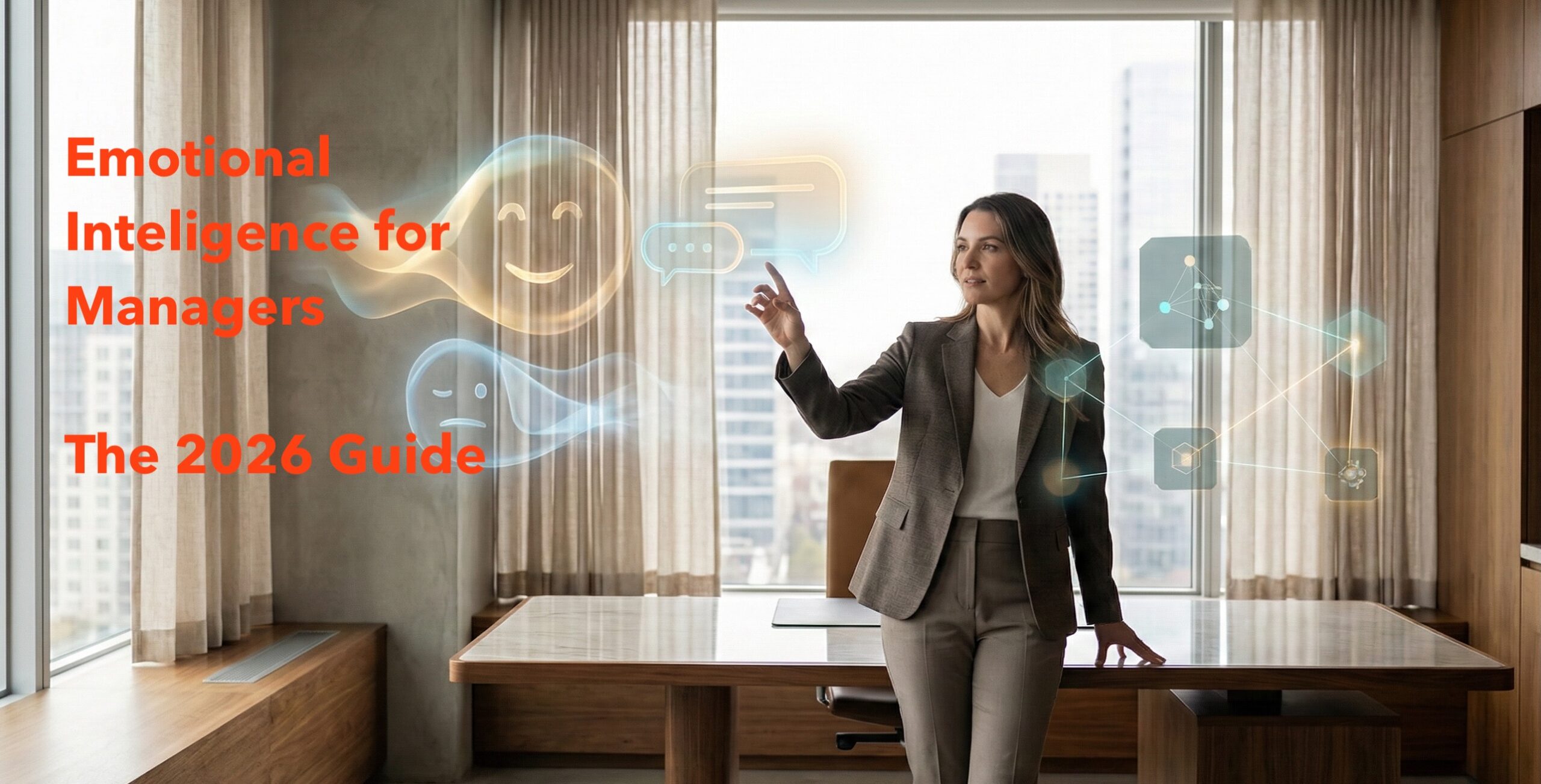
  • Emotional Intelligence for New Managers in 2026

    Emotional Intelligence for New Managers in 2026

    You’ve just been promoted to your first management role, and suddenly the technical skills that got you here aren’t enough. You’re navigating tense team meetings, mediating conflicts between remote and in-office employees, and struggling to read the room on video calls. Welcome to the greatest challenge facing new managers today: mastering emotional intelligence in an increasingly complex workplace.

    Emotional intelligence for new managers has never been more critical.

    As we move through 2026, the workplace landscape demands a fundamentally different leadership approach. AI tools now handle many analytical tasks, leaving human managers to focus on what technology cannot replicate: building trust, inspiring teams, and navigating the nuanced emotional landscape of hybrid work environments. Today’s new managers must lead multigenerational teams spanning Gen Z to Baby Boomers, each with distinct communication preferences and workplace expectations, while maintaining cohesion across distributed teams that rarely meet face-to-face.

    The research is clear: managers with strong EQ for managers outperform their peers by nearly 20% in team productivity and retention metrics. Yet most leadership emotional intelligence development happens through trial and error—a costly approach for both new managers and their organizations. New manager soft skills, particularly emotional intelligence competencies, now rank as the top predictor of leadership success, surpassing traditional metrics like technical expertise or strategic thinking.

    This comprehensive guide will equip you with evidence-based strategies to develop your emotional intelligence across five core competencies: self-awareness, self-regulation, motivation, empathy, and social skills. You’ll learn practical techniques to apply immediately, assessment tools to measure your progress, and real-world scenarios that transform theoretical knowledge into leadership capability.

    The transition from individual contributor to manager is challenging enough, but research shows that technical skills alone won’t guarantee success. According to a landmark study by TalentSmart, emotional intelligence accounts for 58% of performance in all types of jobs, with this figure rising even higher for leadership positions. For new managers specifically, developing emotional intelligence isn’t just beneficial—it’s essential for survival and success in today’s complex workplace.

    The case for prioritizing emotional intelligence for new managers has never been stronger. While IQ and technical expertise might land you the promotion, EQ leadership skills determine whether you’ll thrive in the role. Research from the Center for Creative Leadership found that 75% of careers are derailed for reasons related to emotional competencies, including inability to handle interpersonal problems, unsatisfactory team leadership, and failure to adapt to change.

    Today’s new managers face unprecedented challenges that make manager emotional awareness critical. Leading AI-augmented teams requires the human skills that technology cannot replicate—empathy, motivation, and relationship building. As artificial intelligence handles routine tasks, your value as a manager increasingly lies in your ability to connect with, inspire, and develop your people. Remote and hybrid work environments have eliminated casual hallway conversations and visual cues, making it harder to gauge team morale and address concerns before they escalate. Without strong emotional intelligence, these invisible problems fester.

    Generational diversity adds another layer of complexity. Today’s managers often lead teams spanning four generations, each with different communication preferences, work styles, and motivational drivers. Emotional intelligence equips you to navigate these differences effectively, adapting your leadership approach to meet diverse needs without losing consistency.

    The business impact is measurable. Teams led by emotionally intelligent managers experience 20% higher productivity and significantly lower turnover rates. Perhaps most importantly, emotional intelligence directly creates psychological safety—the foundation of high-performing teams where people feel safe taking risks, admitting mistakes, and bringing their full selves to work. For first-time managers, developing these competencies isn’t a soft skill luxury; it’s the hard skill that determines whether your team succeeds or struggles in an increasingly complex workplace environment.

    The Five Pillars of Emotional Intelligence Every New Manager Must Develop

    Developing emotional intelligence isn’t a nebulous concept—it’s built on five concrete pillars that every new manager can strengthen with deliberate practice. Understanding these foundational EQ skills for leaders gives you a roadmap for growth that directly impacts your team’s performance and engagement.

    Self-Awareness forms the foundation of all emotional intelligence work. As a new manager, this means identifying your emotional triggers before they derail important conversations. Perhaps you become defensive when your ideas are challenged, or you shut down when faced with conflict. This week, start a simple trigger journal: after each team interaction that felt charged, write down what happened and what emotion arose. This practice of self-awareness in management helps you recognize patterns before they become problems.

    Self-Regulation builds on that awareness by giving you tools to manage your responses. When a team member misses a deadline or pushes back on your direction, your ability to pause before reacting separates effective leaders from reactive ones. Try the «90-second rule» this week: when you feel frustration rising, give yourself 90 seconds before responding. Take a brief walk, breathe deeply, or simply count to ten.

    Motivation in emotionally intelligent leadership means connecting your daily work to larger purpose—and helping your team do the same. Start each week by identifying one aspect of your role that genuinely energizes you, then share that enthusiasm authentically with your team. Intrinsic motivation is contagious.

    Empathy requires actively understanding your team members’ perspectives, not just hearing their words. This week, practice reflective listening in your one-on-ones: summarize what you’re hearing before offering solutions. «It sounds like you’re feeling overwhelmed by the project timeline—is that right?» This simple shift demonstrates that you’re truly listening.

    Social Skills encompass everything from conflict resolution to feedback delivery. The most immediate way to strengthen this pillar is implementing the «feedback sandwich» correctly: specific praise, constructive guidance, and encouragement. Practice giving one piece of developmental feedback this week using this structure, focusing on behavior rather than personality.

    Developing emotional intelligence through these five pillars isn’t about perfection—it’s about consistent, incremental improvement that compounds over time into exceptional leadership.

    Building Emotional Intelligence as a New Manager: A Practical Framework

    Building emotional intelligence as a new manager doesn’t happen by chance, it requires a structured leadership development framework. Here’s a practical EQ development plan for managers that delivers measurable results.

    Step 1: Conduct an EQ Self-Assessment

    Begin with honest self-evaluation. Request 360-degree feedback from your supervisor, peers, and direct reports to identify blind spots in how you manage emotions and relationships. This comprehensive view reveals gaps between your self-perception and how others experience your leadership.

    Step 2: Identify Your Top 2 Development Areas

    Rather than tackling everything at once, focus on two specific emotional intelligence competencies. Perhaps you excel at empathy but struggle with emotional regulation during high-pressure situations. Or maybe self-awareness is strong, but relationship management needs work. Prioritization creates momentum.

    Step 3: Practice Daily Micro-Habits

    EQ development happens through consistent small actions. Start each morning with five minutes of reflective journaling about yesterday’s emotional responses. During meetings, practice active listening by summarizing what others say before responding. When triggered, implement a pause-before-responding technique—count to three and take a breath before reacting to challenging situations.

    Step 4: Seek Coaching or Mentorship Support

    While self-directed learning matters, emotional intelligence coaching accelerates your development significantly. An experienced executive coach provides objective feedback, helps you recognize patterns you can’t see yourself, and holds you accountable to your growth goals. Many first-time managers find that working with a leadership coach reduces the learning curve from years to months.

    Step 5: Measure Progress Through Feedback and Reflection

    Schedule quarterly check-ins to evaluate your progress. Request informal feedback from team members on specific behaviors you’re developing. Review your journal entries to identify patterns and improvements. Track concrete outcomes like reduced team conflict, improved one-on-one conversations, or better stress management during deadlines.

    This framework transforms emotional intelligence from an abstract concept into tangible leadership capability, positioning you for long-term success as a manager.

    Common EQ Mistakes New Managers Make (And How to Avoid Them)

    Even well-intentioned new managers stumble when developing emotional intelligence. Here are the most common pitfalls and how to sidestep them.

    Confusing Empathy with Being a Pushover

    Many new managers fear that showing empathy means they can’t hold standards. The truth? Empathetic leaders actually drive better performance. You can acknowledge someone’s stress about a deadline while still maintaining accountability. Practice saying:

    «I understand this is challenging, and I’m confident you can work through it. What support do you need?»

    Ignoring Your Own Emotional Needs

    You can’t pour from an empty cup. New managers often sacrifice their well-being to prove themselves, leading straight to burnout. Schedule non-negotiable time for activities that recharge you. Monitor your stress signals—irritability, fatigue, or cynicism—and address them proactively.

    Avoiding Difficult Conversations

    Postponing tough feedback doesn’t make it easier; it makes problems worse. Emotionally intelligent managers address issues early with curiosity rather than judgment. Frame conversations around impact and future improvement:

    «I noticed the report was submitted late. This affected the client timeline. Let’s discuss what happened and how we can prevent this going forward.»

    Using One-Size-Fits-All Communication

    Your direct reports aren’t all motivated by the same things. Some need detailed direction; others want autonomy. Some prefer written communication; others think best out loud. Invest time learning each person’s preferences and adapt accordingly. This flexibility is emotional intelligence in action.

    Relying on Authority Instead of Influence

    «Because I’m the manager» might get compliance, but it won’t earn commitment. Emotionally intelligent leaders explain the «why,» invite input, and build genuine buy-in. Authority is your title; influence is your impact.

    Conclusion

    Developing emotional intelligence for new managers isn’t an overnight transformation—it’s a continuous journey of self-awareness, empathy, relationship-building, and self-regulation. The encouraging news? EQ is a learnable skill, not a fixed personality trait. Every interaction offers an opportunity to strengthen these capabilities.

    Whether you’re navigating your first leadership role or supporting new managers on your team, professional guidance accelerates growth. At mindslines.com, our executive coaching programs provide personalized strategies to build the emotional intelligence that separates good managers from exceptional leaders. Explore our coaching options today and invest in the leadership skills that will serve you throughout your career.


  • How to Lead Hybrid Teams as a New Manager

    How to Lead Hybrid Teams as a New Manager

    Congratulations on your new management role. Now for the reality check: 73% of first-time managers report that leading hybrid teams is their biggest leadership challenge, according to recent Gartner research. You’re navigating a workplace model that didn’t exist in management textbooks just five years ago, and the stakes are high. Poor hybrid leadership leads to 41% higher turnover rates and significantly lower team engagement scores.

    The good news? Hybrid team management isn’t rocket science—it’s a learnable skill set. This comprehensive guide provides actionable hybrid team management tips for new managers, helping you build trust, drive performance, and create equity across your distributed team. Whether you’re managing two remote employees or leading an entirely distributed team across time zones, these frameworks will set you up for success.

    Why Hybrid Team Leadership Is the Defining Challenge for New Managers

    The transition to first-time manager hybrid work environments creates a perfect storm of complexity. Traditional management relied heavily on physical proximity—observing body language in meetings, casual hallway conversations, and visual cues about workload and morale. Hybrid work removes these informal feedback mechanisms while simultaneously increasing coordination complexity.

    Research from Microsoft’s Work Trend Index shows that hybrid managers spend 43% more time in meetings than their in-office counterparts, yet report feeling less connected to their teams. You’re expected to maintain culture, drive results, and develop talent while your team members work from different locations on different schedules.

    The challenge intensifies because you’re learning management fundamentals while simultaneously mastering a new operational model. It’s like learning to drive stick shift in rush hour traffic. But understanding this challenge is the first step toward overcoming it.

    Building Trust and Psychological Safety in Distributed Teams

    Trust is the foundation of high-performing teams, and it’s exponentially harder to build when you can’t share coffee breaks or read the room during difficult conversations. Leading distributed teams requires intentional trust-building practices that go beyond occasional video calls.

    The Trust Triangle Framework

    Implement what leadership experts call the Trust Triangle: consistency, competence, and care. In hybrid settings, this translates to:

    Consistency: Establish predictable communication patterns. If you say you’ll send weekly updates every Friday at 10 AM, do it without fail. Consistency builds psychological safety because team members know what to expect from you.

    Competence: Demonstrate expertise by making informed decisions and admitting when you don’t know something. New managers often feel pressure to have all the answers. Paradoxically, saying «I don’t know, but I’ll find out» builds more trust than faking expertise.

    Care: Show genuine interest in your team members as whole people. Schedule monthly one-on-ones that aren’t solely performance-focused. Ask about their challenges, career aspirations, and how the hybrid model is working for them personally.

    Transparent Communication Rituals

    Create transparency through structured communication rituals. Share your decision-making process openly, even when delivering unpopular news. When team members understand the «why» behind decisions, trust increases—even if they disagree with the outcome.

    Implement a «default to open» policy where information is shared broadly unless there’s a specific reason for confidentiality. Use shared documents for strategy updates, team goals, and meeting notes so remote and in-office employees have equal access to information.

    Setting Hybrid Team Norms and Communication Rhythms

    The absence of physical proximity means you must explicitly design what many managers previously took for granted. Hybrid team engagement strategies start with co-creating team norms rather than imposing them.

    The Team Charter Exercise

    Within your first 30 days, facilitate a team charter workshop (virtual or hybrid) where you collectively define:

    • Core collaboration hours: When should everyone be available? Many successful hybrid teams establish 10 AM-3 PM as core hours across time zones, with flexibility outside that window.
    • Response time expectations: What’s reasonable for email (24 hours), Slack (4 hours), and urgent issues (immediate)? Clarity prevents resentment.
    • Meeting protocols: Will cameras be required? Can people eat on video calls? Should meetings default to 25 or 50 minutes to allow buffer time?
    • Office day coordination: If your model includes designated office days, align them for maximum collaboration value rather than arbitrary attendance.

    The Communication Hierarchy Model

    Not all communication deserves the same channel. Teach your team this hierarchy:

    1. Urgent and complex: Video call or phone
    2. Important but not urgent: Email with clear subject lines
    3. Quick questions: Team chat with expected response windows
    4. Documentation and decisions: Shared documents or project management tools
    5. Updates and FYIs: Asynchronous updates in designated channels

    This prevents the all-too-common problem of everything feeling urgent and every communication landing in Slack, creating notification overload and fragmented attention.

    Preventing Proximity Bias and Ensuring Equitable Career Growth

    Proximity bias—the tendency to favor employees you see physically—is perhaps the most insidious challenge in how to lead hybrid teams as a new manager. Research shows that remote workers receive 31% fewer promotions and high-visibility assignments compared to their in-office counterparts, even when performance is identical.

    The Equity Audit

    Conduct monthly equity audits by tracking:

    • Who receives stretch assignments and developmental opportunities?
    • Who speaks first and most in hybrid meetings?
    • Whose ideas get attributed and implemented?
    • Who gets informal mentorship and face time with senior leaders?

    If patterns emerge favoring in-office employees, you’re experiencing proximity bias. Awareness is the first step toward correction.

    Deliberate Inclusion Practices

    Implement these structural interventions:

    Round-robin assignments: Systematically rotate high-visibility projects across all team members regardless of location. Keep a spreadsheet to ensure fairness.

    Remote-first meetings: Even when some attendees are in-room together, structure meetings as if everyone is remote. Have in-office participants join from their own computers to level the playing field.

    Skills-based criteria: When selecting who gets developmental opportunities, use explicit criteria related to skills and readiness rather than gut feelings, which are often influenced by proximity.

    Visibility creation: Actively amplify remote employees’ contributions in leadership meetings and company communications. They can’t benefit from hallway conversations with executives, so you must create visibility deliberately.

    Managing Performance and Preventing Burnout in Hybrid Settings

    The shift to hybrid work hasn’t eliminated performance management—it’s complicated it. You can’t manage by walking around or gauge productivity through physical presence. This actually makes you a better manager, forcing outcome-focused leadership rather than activity monitoring.

    Outcomes Over Activity

    Define clear success metrics for each role that focus on results rather than hours logged or attendance. Use the FAST goals framework:

    • Frequently discussed: Goals are reviewed in weekly one-on-ones, not just annual reviews
    • Ambitious: Stretch beyond comfort zones while remaining achievable
    • Specific: Concrete enough that success is measurable
    • Transparent: Visible to the entire team to encourage collaboration

    When performance conversations focus on outcomes, location becomes irrelevant.

    Burnout Prevention Through Boundary Setting

    Hybrid work blurs work-life boundaries, and new managers often inadvertently encourage always-on culture. Combat this through:

    Modeling boundaries: Don’t send messages outside work hours. If you work evenings, schedule emails to send during business hours. Your behavior sets team norms.

    Workload check-ins: In one-on-ones, explicitly ask: «On a scale of 1-10, how sustainable is your current workload?» This simple question surfaces problems before they become crises.

    Recovery time: Require true disconnection during PTO. Don’t contact team members on vacation, and reassign their work clearly so they’re not mentally tracking projects from the beach.

    Energy management: Recognize that back-to-back video calls are cognitively draining. Build breaks into team calendars and encourage «camera optional» for internal meetings when presentation isn’t necessary.

    Creating Connection and Team Cohesion Across Distance

    High-performing teams share strong interpersonal relationships, and building these connections requires intentionality in hybrid environments. The spontaneous bonding that happens naturally in offices won’t happen automatically in distributed teams.

    Structured Social Connection

    Schedule quarterly virtual or in-person team experiences that prioritize relationship-building over work discussions. This might include:

    • Virtual coffee randomization where team members are paired monthly for 30-minute non-work conversations
    • Team retrospectives focused on «what’s working well» to build shared positive experiences
    • Optional virtual co-working sessions where people work independently but together, recreating the office ambiance some employees miss

    The key word is «structured.» Hope is not a strategy for team cohesion.

    Celebrating Wins Publicly and Consistently

    Remote employees often feel invisible when achievements go unrecognized. Create a weekly recognition ritual in team meetings or Slack channels where you highlight specific contributions. Be concrete: «Jamal’s analysis of customer churn patterns directly influenced our product roadmap» is more meaningful than «great job, Jamal.»

    The Role of Coaching in Developing Hybrid Leadership Skills

    Here’s an uncomfortable truth: most new managers receive promotions based on individual contributor performance, not leadership capability. You’re expected to excel at skills you’ve never been taught, in a work environment that’s unprecedented.

    Professional coaching accelerates your development by providing personalized guidance, accountability, and a confidential space to navigate challenges. Leadership coaches help you:

    • Develop your unique management style rather than imitating others poorly
    • Process difficult situations and emotions without burdening your team
    • Identify blind spots that informal feedback won’t surface
    • Build strategic thinking capabilities that transcend tactical firefighting
    • Navigate organizational politics and stakeholder management

    Many successful managers consider coaching the differentiator between surviving and thriving in their first leadership role. It’s particularly valuable in hybrid settings where you can’t learn by osmosis from experienced managers in the next cubicle.

    Frequently Asked Questions About Leading Hybrid Teams

    How do I know if my hybrid team is truly engaged or just going through the motions?

    Look beyond attendance metrics to engagement indicators: Are team members volunteering ideas in meetings? Do they ask clarifying questions about strategy? Are they collaborating across functions without your prompting? Conduct quarterly anonymous pulse surveys asking specific questions: «Do you understand how your work contributes to company goals?» and «Do you feel your voice is heard in team decisions?» Declining scores are early warning signals. Additionally, watch for decreased camera usage, minimal chat participation, and one-word responses—these often signal disengagement before it shows up in performance metrics.

    What should I do if some team members want more office time while others prefer fully remote?

    This tension is normal and requires facilitated conversation rather than mandate. First, understand the underlying needs: Is the office-preferring employee seeking social connection, better workspace, or separation from home distractions? Is the remote-preferring employee managing caregiving responsibilities, avoiding commute time, or working more productively in solitude? Once you understand needs, you can address them creatively. Perhaps office-preferring employees come in on aligned days for maximum collaboration, while remote employees get upgraded home office equipment. The goal isn’t uniform behavior—it’s meeting diverse needs while maintaining team cohesion. Document agreements in your team charter and revisit quarterly.

    How can I give constructive feedback effectively in a hybrid environment?

    Never deliver constructive feedback via email or chat—tone is too easily misinterpreted. Schedule video calls where you can read facial expressions and respond to reactions in real-time. Use the SBI framework: Situation («In yesterday’s client meeting»), Behavior («when you interrupted the client mid-sentence»), Impact («they became visibly frustrated and we lost the thread of their concern»). Then pivot to collaborative problem-solving: «What was happening for you in that moment?» and «How can we approach similar situations differently?» Follow up with a brief written summary so there’s documented clarity, but the emotional labor happens face-to-face. Schedule feedback conversations regularly, not just when problems arise, so they don’t feel punitive.

    Building Your Hybrid Leadership Capabilities

    Leading hybrid teams as a new manager is undeniably challenging, but it’s also an opportunity to build leadership capabilities that will serve you throughout your career. The skills you develop now—intentional communication, equitable treatment, outcome-focused management, and adaptive leadership—are the future of management regardless of where work happens.
    Remember that perfect execution isn’t the goal; continuous improvement is. You’ll make mistakes. You’ll have meetings that flop and initiatives that don’t land. What separates successful hybrid managers from struggling ones isn’t flawless performance—it’s the willingness to solicit feedback, adjust approaches, and keep developing.

    If you’re feeling overwhelmed by the complexity of first-time manager hybrid work, you’re not alone. At Mindslines, we specialize in coaching new managers through exactly these challenges. Our leadership coaches work one-on-one with emerging leaders to accelerate their development, navigate complex team dynamics, and build confidence in their leadership identity. Whether you’re looking for individual coaching or developing a cohort of new managers across your organization, our evidence-based approach helps leaders move from surviving to thriving.

    Ready to elevate your hybrid leadership skills? Explore Mindslines’ coaching programs designed specifically for new managers navigating the complexities of distributed team leadership. Because the best investment you can make in your team’s success is investing in your own development first.

  • First-Time Manager Training 2026: AI-Integrated Frameworks for New Leaders

    First-Time Manager Training 2026: AI-Integrated Frameworks for New Leaders

    The transition from individual contributor to manager remains one of the most challenging career pivots professionals face. Yet as we move through 2026, the landscape of first-time manager training has fundamentally transformed. Traditional management courses that once dominated corporate learning catalogs are giving way to dynamic, AI-integrated programs that address the realities of hybrid work, digital collaboration, and the psychological demands of modern leadership.

    If you’re preparing to step into a management role—or responsible for developing new managers—understanding these shifts isn’t optional. It’s the difference between thriving and merely surviving in today’s leadership environment.

    Why Traditional First-Time Manager Training Falls Short in 2026

    The conventional approach to new manager onboarding typically involves a two-day workshop, maybe a leadership book, and the optimistic assumption that people will «figure it out.» This model fails because it ignores three critical realities:

    First, new managers now lead distributed teams where 73% of employees work in hybrid or fully remote arrangements. The skills required to motivate someone you see twice a month differ dramatically from traditional office management.

    Second, today’s managers must navigate AI collaboration tools, digital performance metrics, and asynchronous communication—none of which appeared in management training programs even five years ago. Digital literacy isn’t a nice-to-have; it’s foundational to effective leadership.

    Third, the psychological toll of management has intensified. First-time managers report 60% higher stress levels than their individual contributor peers, yet most training programs dedicate zero time to mental resilience, boundary-setting, or sustainable leadership practices.

    The content gap is clear: aspiring managers don’t need another course roundup. They need actionable frameworks that integrate AI tools, address hybrid team dynamics, and build psychological resilience from day one.

    The 2026 Framework for First-Time Manager Training

    Effective leadership development in 2026 requires a structured approach that balances technical skills, emotional intelligence, and digital fluency. Here’s the framework that actually prepares new managers for success:

    Foundation 1: AI-Augmented Leadership Skills

    The most successful manager training programs now incorporate AI literacy as a core competency. This doesn’t mean learning to code—it means understanding how to leverage AI tools for better decision-making, communication, and team development.

    Practical applications include:

    – Using AI-powered analytics to identify team performance patterns before they become problems

    – Leveraging natural language processing tools to analyze communication effectiveness and team sentiment

    – Implementing AI coaching assistants that provide real-time feedback during difficult conversations

    – Automating routine management tasks to preserve time for high-value human interactions

    The key insight: AI doesn’t replace management judgment; it amplifies it. First-time managers who embrace this reality outperform peers who view technology as separate from leadership.

    Foundation 2: Hybrid Team Management Mastery

    Managing hybrid teams requires fundamentally different skills than traditional office management. Your new manager onboarding must explicitly address these scenarios:

    Asynchronous communication excellence: Train managers to craft clear, complete written communications that eliminate unnecessary meetings. This includes structuring decision memos, providing context-rich feedback, and documenting thought processes that remote team members can access on their schedule.

    Presence without proximity: Develop strategies for building genuine relationships across digital channels. This means moving beyond transactional Slack messages to intentional one-on-ones, virtual coffee chats, and creating space for informal connection that once happened naturally in offices.

    Equitable visibility management: Address the documented bias where in-office employees receive more recognition and opportunities. Implement systems that ensure remote team members have equal access to high-visibility projects, mentorship, and career development.

    Digital body language fluency: Train managers to read engagement signals in video calls, interpret message timing and tone, and recognize when someone is struggling despite saying they’re «fine» in text.

    Foundation 3: The Resilience-First Approach

    The dirty secret of management: the role fundamentally changes your relationship with work, and most new managers aren’t prepared for the psychological shift.

    A resilience-first approach to first-time manager training addresses this proactively:

    Boundary architecture: Before new managers take on their first report, teach them to establish sustainable work boundaries. This includes defining response-time expectations, protecting focus time, and modeling healthy work-life integration for their team.

    Emotional regulation techniques: Management involves constant context-switching between strategic thinking and interpersonal challenges. Train specific techniques like the «90-second rule» for processing emotional reactions before responding, and cognitive reframing for high-stress situations.

    Decision-making frameworks under uncertainty: New managers often freeze when facing ambiguous situations with incomplete information. Provide structured frameworks like the RAPID model (Recommend, Agree, Perform, Input, Decide) that clarify decision rights and reduce analysis paralysis.

    Peer support systems: Isolation is one of the biggest challenges for first-time managers. Build cohort-based learning where new managers share experiences, troubleshoot challenges together, and normalize the struggle of stepping into leadership.

    Implementing Your Manager Training Program: The 90-Day Blueprint

    Theory matters less than execution. Here’s how to structure a new manager’s first 90 days for maximum effectiveness:

    Days 1-30: Foundation and Assessment

    Begin with a comprehensive skills assessment that identifies individual strengths and development areas. Pair new managers with experienced mentors who meet weekly for the first month.

    Introduce core management frameworks: effective one-on-ones, feedback models (like SBI: Situation-Behavior-Impact), and basic performance management. Keep it simple and immediately applicable.

    Schedule «shadow sessions» where new managers observe experienced leaders handling common scenarios: delivering difficult feedback, running team meetings, navigating conflicts.

    Days 31-60: Application and Iteration

    Transition from learning to doing. New managers should now run their own one-on-ones, team meetings, and begin making independent decisions with mentor backup.

    Introduce AI tools relevant to your organization. Provide hands-on training in whatever systems your managers will actually use—whether that’s performance analytics platforms, communication tools, or project management software.

    Conduct mid-point feedback sessions where new managers reflect on challenges, celebrate wins, and adjust their approach based on early results.

    Days 61-90: Integration and Independence

    By month three, new managers should operate independently while maintaining regular mentor check-ins. Focus shifts to strategic thinking: How does their team’s work connect to broader organizational goals? What culture are they actively building?

    Introduce more complex scenarios: handling underperformance, managing team conflicts, advocating for resources. Use case studies and role-playing to build confidence before real situations arise.

    Conduct a comprehensive 90-day review that assesses progress, identifies ongoing development needs, and transitions the new manager to long-term leadership development programs.

    Measuring What Matters: Beyond Course Completion Rates

    Traditional training metrics—completion rates, satisfaction scores—tell you almost nothing about whether your first-time manager training actually works. Instead, measure:

    Team engagement scores: Do reports feel supported, heard, and developed? Survey team members at 90 and 180 days.

    Manager confidence metrics: Track selfreported confidence in handling common management scenarios over time.

    Retention rates: Both of the new manager and their team members. High turnover signals training gaps.

    Time-to-competency: How quickly do new managers achieve independence in core responsibilities?

    Business outcomes: Ultimately, does the manager’s team deliver results? Track productivity, quality, and goal achievement.

    The Technology Stack for Modern Manager Development

    The right tools amplify your leadership development efforts. Consider integrating:

    AI coaching platforms that provide personalized feedback and simulate difficult conversations for practice

    Learning management systems with microlearning capabilities for just-in-time training

    Peer learning platforms that facilitate cohort discussions and knowledge sharing

    Performance management tools that make ongoing feedback and goal-tracking effortless

    Analytics dashboards that help new managers understand team dynamics and identify issues early

    The key is integration: these tools should work together seamlessly rather than creating additional administrative burden.

    Common Pitfalls in First-Time Manager Training (And How to Avoid Them)

    Even well-intentioned programs often stumble. Watch for these failure patterns:

    Information overload: Dumping 40 hours of content on new managers in their first week guarantees nothing sticks. Space learning over time and focus on immediately applicable skills.

    Theory without practice: Lectures about leadership principles mean nothing without opportunities to apply them in safe environments. Build in role-playing, simulations, and real-world projects with mentor support.

    One-size-fits-all approaches: A new manager leading software engineers needs different skills than one managing sales reps. Customize training to role-specific challenges.

    Neglecting the identity shift: Moving from peer to manager requires processing feelings about changed relationships. Programs that ignore this emotional dimension fail.

    Insufficient ongoing support: The learning doesn’t stop after the initial training period. Provide continuous development opportunities, refresher sessions, and advanced skills training.

    Looking Forward: The Future of Leadership Development

    As we progress through 2026 and beyond, first-time manager training will continue evolving. Emerging trends include:

    Personalized learning paths powered by AI that adapt to individual manager’s learning styles and challenges

    Virtual reality simulations for practicing difficult conversations and decision-making in psychologically safe environments

    Neuroscience-informed approaches that optimize how we teach leadership skills based on how brains actually learn and change

    Global, asynchronous cohorts that enable peer learning across time zones and cultural contexts

    The organizations that invest in comprehensive, modern first-time manager training gain enormous competitive advantages: higher retention, stronger culture, better business results, and a robust leadership pipeline.

    Your Next Steps

    Becoming an effective manager—or developing effective managers—requires intentional effort and the right framework. The 2026 approach integrates AI literacy, hybrid team management, and psychological resilience into a comprehensive program that actually prepares leaders for today’s challenges.

    Start by assessing your current approach: Does your manager training program address distributed teams? Does it build digital fluency? Does it support mental resilience? If not, you’re preparing managers for a workplace that no longer exists.

    The transition to management will never be easy, but with the right training foundation, it doesn’t have to be as overwhelming as it often feels. Whether you’re stepping into your first leadership role or responsible for developing new managers, the frameworks outlined here provide a roadmap for success in 2026’s leadership landscape.

    Ready to transform your approach to leadership development? Explore how Mindslines can help you build manager training programs that actually work, combining proven frameworks with cutting-edge approaches to create leaders who thrive in today’s hybrid, AI-augmented workplace.

  • El del día que fui jefe sin saber ser líder

    El del día que fui jefe sin saber ser líder

    🎙️ Episodio. 10: ¿Qué pasa cuando te nombran jefe undía y al siguiente entras al curro con cara de lunes eterno? Pues que la lías. Y eso es justo lo que nos cuenta David Russ, que debutó en su rol de líder estrenando despacho, cargo… ¡y una fuga de agua en su cocina!

  • Crisis ganadera en Tapachula: 100,000 animales sin control Sanitario

    Tapachula (México), 22 may (EFE).- Ganaderos del sur de México aseguraron este jueves que unas 100.000 cabezas de ganado son ingresadas sin ningún control sanitario al mes por los más de 692 kilómetros de frontera con Guatemala, lo que agrava el problema de la plaga del gusano barrenador que derivó en el cierre, por parte de Estados Unidos, de las importaciones de carne desde México.

    El productor de ganado en Tapachula Julio César Herrera habla durante una entrevista con EFE este jueves, en Tapachula (México). EFE/Juan Manuel Blanco
    Así lo indicó a EFE Julio César Herrera, productor de ganado de Tapachula, al remarcar el problema del trasiego ilegal de ganado en la frontera sur en medio de las tensiones con Estados Unidos.

    Fotografía que muestra ganado vacuno este jueves, en Tapachula (México). EFE/Juan Manuel Blanco
    “La preocupación es porque el mercado está establecido. Los norteños que tienen comprado en Guatemala les exigen pasarlos, aunque no logren pasarlos a Estados Unidos, pero sí pasan a Chiapas (estado mexicano fronterizo)”, sostuvo.

    Herrera indicó que el problema es que no se revisa, puesto que se cuenta con una frontera porosa, «y no hay control de nada, pasa de todo y las autoridades en este caso se están haciendo ricos».

    Denunció, asimismo, que funcionarios locales cobran alrededor de 800 pesos (40 dólares aproximadamente) por arete de certificación para legalizar el ganado que viene de fuera (Centroamérica), por lo que advirtió que este recurso debería entrar a la Tesorería Nacional.

    El ganadero subrayó que el gobierno federal y el Servicio Nacional de Sanidad, Inocuidad y Calidad Agroalimentaria (Senasica), además de los gobiernos estatales y locales deben trabajar en establecer programas para el control y erradicación de las plagas como es el gusano barrenador.

    Por su parte el director del rastro municipal en Tapachula, Jorge Ortiz Arévalo, expresó su preocupación por el ingreso de ganado proveniente de Centroamérica, algo que ahora se agudiza con la presencia del gusano barrenador sin que se tenga la certeza de que se está combatiendo su ingreso a México.

    “Debe haber más puestos de control, retenes que cuenten con algún tipo de alberca, se bajen y pasen a ese tanque que lleva insecticida en contra de la mosca barrenadora”, reclamó Ortiz.

    Desde el gobierno federal, no obstante, la Secretaría de Agricultura y Desarrollo Rural (Sader) aseguró que está haciendo todo lo “materialmente posible” para combatir al gusano barrenador, ante el anuncio del cierre de la importación de ganado por 15 días (11 a 25 de mayo) por parte de Estados Unidos.

    El Consejo Nacional Agropecuario indicó que la decisión de Estados Unidos de frenar las importaciones de ganado bovino, equino y bisonte procedente de México podría significar pérdidas diarias de 11,4 millones de dólares diarios para el país.

    El brote del gusano barrenador, una larva de mosca que deposita sus huevos en heridas abiertas de animales, representa un grave riesgo para la salud animal y la economía ganadera de México, que había logrado erradicar esta plaga en 1991, manteniendo un estatus sanitario que ahora podría verse comprometido si no se controlan los nuevos casos. EFE

  • Crisis ganadera en Tapachula: 100,000 animales sin control Sanitario

    Tapachula (México), 22 may (EFE).- Ganaderos del sur de México aseguraron este jueves que unas 100.000 cabezas de ganado son ingresadas sin ningún control sanitario al mes por los más de 692 kilómetros de frontera con Guatemala, lo que agrava el problema de la plaga del gusano barrenador que derivó en el cierre, por parte de Estados Unidos, de las importaciones de carne desde México.

    El productor de ganado en Tapachula Julio César Herrera habla durante una entrevista con EFE este jueves, en Tapachula (México). EFE/Juan Manuel Blanco
    Así lo indicó a EFE Julio César Herrera, productor de ganado de Tapachula, al remarcar el problema del trasiego ilegal de ganado en la frontera sur en medio de las tensiones con Estados Unidos.

    Fotografía que muestra ganado vacuno este jueves, en Tapachula (México). EFE/Juan Manuel Blanco
    “La preocupación es porque el mercado está establecido. Los norteños que tienen comprado en Guatemala les exigen pasarlos, aunque no logren pasarlos a Estados Unidos, pero sí pasan a Chiapas (estado mexicano fronterizo)”, sostuvo.

    Herrera indicó que el problema es que no se revisa, puesto que se cuenta con una frontera porosa, «y no hay control de nada, pasa de todo y las autoridades en este caso se están haciendo ricos».

    Denunció, asimismo, que funcionarios locales cobran alrededor de 800 pesos (40 dólares aproximadamente) por arete de certificación para legalizar el ganado que viene de fuera (Centroamérica), por lo que advirtió que este recurso debería entrar a la Tesorería Nacional.

    El ganadero subrayó que el gobierno federal y el Servicio Nacional de Sanidad, Inocuidad y Calidad Agroalimentaria (Senasica), además de los gobiernos estatales y locales deben trabajar en establecer programas para el control y erradicación de las plagas como es el gusano barrenador.

    Por su parte el director del rastro municipal en Tapachula, Jorge Ortiz Arévalo, expresó su preocupación por el ingreso de ganado proveniente de Centroamérica, algo que ahora se agudiza con la presencia del gusano barrenador sin que se tenga la certeza de que se está combatiendo su ingreso a México.

    “Debe haber más puestos de control, retenes que cuenten con algún tipo de alberca, se bajen y pasen a ese tanque que lleva insecticida en contra de la mosca barrenadora”, reclamó Ortiz.

    Desde el gobierno federal, no obstante, la Secretaría de Agricultura y Desarrollo Rural (Sader) aseguró que está haciendo todo lo “materialmente posible” para combatir al gusano barrenador, ante el anuncio del cierre de la importación de ganado por 15 días (11 a 25 de mayo) por parte de Estados Unidos.

    El Consejo Nacional Agropecuario indicó que la decisión de Estados Unidos de frenar las importaciones de ganado bovino, equino y bisonte procedente de México podría significar pérdidas diarias de 11,4 millones de dólares diarios para el país.

    El brote del gusano barrenador, una larva de mosca que deposita sus huevos en heridas abiertas de animales, representa un grave riesgo para la salud animal y la economía ganadera de México, que había logrado erradicar esta plaga en 1991, manteniendo un estatus sanitario que ahora podría verse comprometido si no se controlan los nuevos casos. EFE

  • El de cuando la empatía me jugó una mala pasada

    El de cuando la empatía me jugó una mala pasada

    🎙️Episodio 9: En este episodio de Mi Gran Cagada nos acompaña Helena Hernández, una líder con 25 años de experiencia y una mochila cargada de aprendizajes… y alguna que otra buena cagada (de esas que dejan huella). 😅

  • El de cuando pensé que emprender era mi Ikigai, y resultó no serlo

    El de cuando pensé que emprender era mi Ikigai, y resultó no serlo

    🎙️ Espisodio 8: Esta semana nos acompaña la poderosa,carismática e imparable Edu Ortiz, una crack en ciberseguridad, liderazgo y energía vital. Pero sí, incluso las más cracks la cagan. 💥

  • El de la carrera que no quería, el socio que no encajaba y el instinto que lo sabía

    El de la carrera que no quería, el socio que no encajaba y el instinto que lo sabía

    🎙️ Episodio 7: En este episodio, Rafa Calle,cofundador de Magnettu, nos abre su diario de batallas emprendedoras y nos cuenta tres cagadas de las gordas: estudiar una carrera que no le hacía tilín, cambiar de trabajo por razones equivocadas y elegir un socio sin el fit adecuado.

  • El de cuando dar algo por hecho me costó una gran oportunidad

    El de cuando dar algo por hecho me costó una gran oportunidad

    🎙️ Episodio 6: En este episodio, Terry McKean,speaker, coach y formador, nos comparte una gran cagada profesional que le enseñó una de las lecciones más valiosas de su carrera: nunca des nada por hecho y mantente siempre presente con cada persona en la sala.